Archive for the ‘Web Design’ Category.

When it comes to designing an effective website that helps boost a company’s web presence globally, no doubt a professional designer is always favored. But while most designers are aware about the tricks and tips to do so that a design rise above the crowd of mediocrity, not many are informed about the things to exclude to save a website design from being tagged as ‘annoying’.

Designers, especially new ones, are in love with their ideas. But as a professional you should maintain not to overdo it in one way or another. Here in this article we will be discussing about some of the things that you should stay away from as a professional designer when designing a website:

1. Huge Flash Intro Screen: The main objective of designing a website is to attract visitors. Hence make it a point that you do not make your visitors wait for long. Using huge flash intros can slow down your website, thus driving away potential customers.

Background Music

2. Background Music: Adding music to your website background is an absolute no-no unless you are designing for a radio station or a music company. It has been observed that most of online visitors do not enjoy a musical background that goes on continuously on every web page.

3. Huge Font Size: It’s a myth in web designing industry that the best way to attract a visitor’s attention is to use big fonts. But it’s not true, as visitors do not like to be shouted at.

4. Small font size: Using very small fonts in the content can also drive away your visitors. Make sure that you do not make it too loud or too soft, but try to keep a normal tone that has an interactive and communicative approach.

5. Overlapping layers: Using layers can be useful upto a level but make sure that you don’t make it annoying for visitors. Forcing visitors to read through your messages is not the right way of approaching customers. If you want to attract more potential clients to a website, try persuasion instead of brute force.

6. Popup Windows: Many website designs display sudden popup windows which can be a big reason of annoyance for visitors. It not only distracts a visitor’s attention but also becomes a hindrance to the smooth navigational flow of the website. Hence try to avoid popup windows in your website design layout.

Bloggers.com

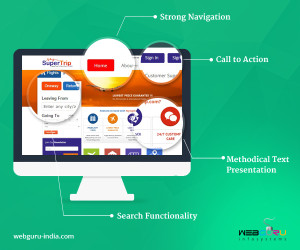
With users of today having no time to waste; website designs that allows easy and smooth navigational facility makes for a more favored choice among visitors. To satisfy the need and requirement of clients at its best, a variety of navigational patterns are used by website designers that makes the architectural foundation of a website. Get a better understanding about the topic as we discuss about some of the popular website design navigational patterns and their respective characteristics:

Top Horizontal Bar Navigation

Considered as one of the most popular navigational menu design pattern, top horizontal bar navigation is the most frequently used in website designing. Mostly found above or below the site header of all the web pages in a website, this pattern is suited for single column website layout. The characteristics of a top horizontal bar navigation are as follows:

  • Navigational items are presented in text links that are either button shaped or tabbed shaped.
  • Mostly placed horizontally, this navigation pattern is found close to the logo and above the fold.

Vertical Bar/Sidebar Navigation

In this pattern type, the navigational items are arranged one above the other in a single column. Mostly found on the top left column of the primary content area, vertical bar or sidebar navigation pattern performs better in left to right usability than vice versa.

Suitable for both sub-navigation and primary navigation menus, vertical bar navigation are commonly used in multi column website design layout that contains lots of links. The characteristics of a vertical bar navigation are as follows:

  • In vertical or side bar navigation, text links are widely used where as tabs are rarely opted for.
  • In vertical menus, plenty of links can be added.

Tab Navigation

Tab navigation is the pattern that designers can be incorporate and style in any way according to their need. From realistic and textured tabs to glossy, rounded tabs and simple, squared-edge tabs, tab navigation opens new ways of implementation in virtually every kind of websites. The characteristics of tab navigation are as follows:

  • It resembles and function similar to real world tabs such as folders, notebooks etc.
  • Though frequently used horizontally, tab navigation can also be designed vertically.

Breadcrumb Navigation

Breadcrumb navigation is a form of secondary navigation that is mostly used to support a website’s primary routing system. With its name derived from the fairy tale of Hansel and Gretel, the main task of this navigation pattern is to help a visitor find his way back home. The characteristics of this breadcrumb navigation are as follows:

  • Breadcrumb navigation is mostly formatted as a horizontal list of text links that are connected with arrows.
  • Though widely used as a sub-navigational pattern, breadcrumb is never used for primary routing purpose.

Search Navigation

In the last couple of years, search navigation has made it big in the market as one of the most used routing system that is well suited for heavy content websites which are difficult to navigate otherwise. Mostly used in e commerce and blog sites, search navigation makes content easily accessible to visitors. The characteristics of search navigation pattern are as follows:

  • Search navigation bars are mostly located at the top of a website layout, i.e. near the header or top of sidebar.
  • This navigation pattern is also found repeated on auxiliary sections of a page layout.

With the advent of new cutting edge technologies, the industry of web has gone for a massive change in the last few years. As professionals, there’s no denying that you need to stay focused and updated about the latest trends. But despite the dynamic changes, there are certain aspects that stay constant and evergreen for years to come. Here we will be discussing about the four constants that have been in the industry for long and is expected to stay stable in the coming years also:

1. People Skills

Instead of vocal communication, modern day interaction is mainly dependant on online chats and forums. Being a website designer, you need to maintain a strong platform of conversation with your clients, either through phone calls or online calls. The success of any project largely depends on the ability to interact with your client. Make him feel important by communicating about things such as design decisions, customer experience, technical implementations etc, so that he relates to the project well. Building a long term relationship with your clients is a must need that helps in making it big in today’s world of competition.

2. Reliability

Winning client’s trust makes one of the most important needs that can help you enjoy repeat customer visit. Building a professional reputation along with reliability and stability makes some of the most needed aspects that pave the platform for repeat customer visit for a second or third project. Maintain to follow the following guidelines to make yourself dependable and trustworthy to your clients:

  • Always try to finish a project within its scheduled timeframe. Never miss deadlines after committing to clients.
  • Always be accessible for your clients. Let them know about the updates and process at regular intervals. Ignoring them or failure to communicate is a big no-no when dealing with clients.
  • Be consistent about your quality of work as customers stay loyal to brands that produce quality solutions.

3. Experience
It’s truly said that ‘Experience speaks volumes’. To make a mark in the industry of web, you need something more than just hard work to convince clients about your ability. Experience is a powerful asset that makes you considered among the league of professionals who are confident and capable of handling any situation that crops up.

4. Change

Last but not the least, the forth aspect that stays constant in web industry is ‘change’. A designer needs to stay in sync with the constant changing technologies, trends, styles and business models of website designing to be able to provide the best to clients.

Wed 09
Feb
2011

Have you ever chanced upon a website that tests your patience? No matter how informative or unique a website is, you need it to get loaded as fast as it could. Busy person as you are, you do not have much time in hand to wait minutes after minutes to draw out information from a single website. So, what’s next? Like the rest of other visitors, you will be forced to bounce back from that website. This seems logical and natural too. But what if your website suffers the same fate because of poor loading speed. You simply cannot afford to lose your visitors. So, the best thing that you can do to retain your visitors is to speed up your website and this can be done by following some tips that are enlisted here:

Check out some basic tips to give your website’s performance a shot in the arm:

Try External CSS and JS Files: – Do not make you website heavy by cramming it with internal CSS and JavaScript files. You can easily put them into external files and then fetch their function in the main HTML files whenever required. However, it requires advance level of knowledge. By defining everything in the main CSS file, you can help browser render your website in less time as it is well informed of the style rules that are needed to be applied. An added bonus, external JavaScript will allow you make changes in your website in a jiffy.

Resizing Images in HTML: A Big No-No
Do not use HTML attributes (for example img width and height) while resizing images. Rather you should try Photoshop for the same purpose. By resizing and resaving images, you can reduce loading speed of your website significantly.

More Text, Less Images
Images, though an integral part of website design, are useless for SEO. The reasons are obvious, search engines cannot read Images. Therefore, if you want to give your website’s visibility a boost, stop using images unnecessarily. Not only do they increase loading speed, but also they adversely affect visibility of your website. However, if you need to use custom fonts, you can try your luck with CSS @font-face.

Junk Free Coding

Take a look at your website’s source code and you will be in for a surprise. Remove the redundant codes and silly comments as far as possible. Stop usingas CSS comes with similar options.

Content Delivery Network (CDN)
Speed of a website can get affected if your server is located in a faraway land. Try to have your servers located in different geographical locations to get rid of this problem. However, CDN may cost you a little bit, but given its advantages, you should afford this little extra cost.

Mon 07
Feb
2011

Website designing is more like building a house that needs for a rough architectural outline. Though it’s quite tempting for many website designers to skip the wireframing phase, it definitely makes an important need of web development. Making things easier for a designer, having a rough draft at hand surely has its benefits. Here in this article we will be discussing about wireframing and its various benefits that can help create a well structured website design with much ease:

What is Wireframe?

Before we discuss about the benefits of wireframing, let’s take a pause and know what wireframing exactly means. Speaking candidly, wireframe is actually the skeleton or blueprint of your website design, i.e. it is the rough visual representation of your website design that you will be working on. With its basic layout structure and navigational schemes, a wireframe makes the work of a designer much more organized and structured.

Benefits of Wireframe

Used to decide on the final arrangement of a design, wireframing is the grayscale outline of where the different design elements will be placed on the page. Designers can effectively use the benefits of this practice to the maximum as given below:

  1. Wireframe allows making changes in design more systematic
    As a designer, it is accepted that you will need to modify and change your design once or twice, according to your client’s likings. At the same time, you also know that when you produce a finished design to your client and he asks you to modify some portions of it, there are multiple changes involved which may increase your costing.

    This is where wireframe can help you best. Produce a wireframe to your clients initially and ask him for feedbacks. Need to make the header a little small or big? Its easy; just note it and have it changed in the final design. Not only wireframing comes across as a handy tool for designer, but it also helps you save a lot of time and cost.

  2. It Makes Site Navigation Easy and Better
    Easy navigational access makes an essential need in website designing. With users becoming more web savvy, a negative navigation can drive away your targeted audience. With wireframe, designers can have their web design well tested beforehand to ensure proper working of every elements such as dropdown menus, page routing etc.
  3. It Makes Content Development More Friendly
    In content development too, wireframe is a great help worth trying out. Instead of using big blocks of text that most readers do not read through, designers can have the content layout planned in wireframe. It makes the work easier for the designer as he decides on the final use of fonts, bullets, headings, sub headings etc in the web design.
  4. Helps a web developer
    A wireframe definitely helps a web developer with a clear and comprehensive idea of the designing. It not only clarifies the objectives of the design but also enables the developer to decide better about which web technology and techniques to use so that it results in a comprehensive result.

In this age of globalization where marketing makes the final word, it is important that you know the tricks of not only attracting visitors but also turn them into customers. One of the effective ways to have your business soaring new heights of success is to trigger the sinful human desire of indulgence.

Since the start of the universe, human desires have been exploited by many to achieve beneficial outcomes. In website design industry also, the golden rule of survival is to encourage user engagement so that they are tempted about your service and product. Read below and know for yourself how you can twirl the deadly sins of human desire in your favor and generate momentum with your visitors:

1. Pride

Flaunting a little pride being the ‘in’ thing of the age, why stay back when you can attract more customers by promoting your company accomplishments? Everyone wants to be considered the best among others. They want to be associated with things that are branded and impressive. Show off your brand and achievements with pride to your potential customers so that it prompts them to call for action.

2. Greed

‘Unlimited’ is the word that describes human cravings best. Bank on this fact and provide your visitors with more and more functionalities and lucrative rebate offers so that they are tempted to sign up for your product or services.

3. Sloth

With technological developments, customers expect products that are capable of doing all the hard works for them. Hence, products or services that provide with easy access or zero effort solution make an instant hit among customers. Win over your potential customers with easy functionalities and features that are not time consuming

4. Envy

To feel jealous of one’s possession and to crave for the same or better is another prominent human nature. Bank on this human trait and fuel up the desire of your customers to enjoy a momentum in your business website. Stand tall among your competitors by seducing maximum customers to your products.

5. Lust

Though we all are acquainted with the statement that ‘all that glitters is not gold’, it doesn’t hold true for marketing. Human eyes catch anything that is shiny, attractive and exclusive. Tickle your customer’s desire for your products with help of professional photography so that it catches one’s fancy instantly. You will be happily surprised to discover how showcasing of products in splendor and grandeur can help attract more customers.

6. Emotions

Bank on your customer’s emotions to create buzz about your products or services on the web. Know that nothing works better in your favor than a good customer review.

Wed 02
Feb
2011

In designing, to create something out of the box that displays aesthetic harmony of its elements is a challenge for every designer. If you also belong to the league of professionals who constantly strive to think up of creative ways to make a website design look interesting and enticing, using symmetry makes for a prominent solution. It not only ensures a systematic approach to the layout but also creates a sense of completeness. Scroll below and read through this article to know more about the types and tips of symmetry that can work wonder for your design:

Types of symmetry: Effective use of symmetry in designing can add to the visual stability and interest of viewers. Broadly speaking, there are three types of symmetry that are used: reflection (bilateral) symmetry, rotational (radial) symmetry and translational symmetry.

  1. Reflection symmetry: Also known as bilateral symmetry, this form of design displays a mirror effect that creates another instance of itself. Widely found in the elements of nature, reflection symmetry has its central axis vertically. Banking on the magic of reflection to the maximum, designers use this symmetric effect to add an artistic touch to their work.
  2. Rotational Symmetry: True to its name, rotational symmetry displays circular placement of object in a particular direction starting from a fixed point. This symmetry type is also known as radial symmetry and it exhibits a creative portray of speed and action.

  3. Translational Symmetry: Most commonly used in website designing, translational symmetry is all about relocating of an object in different positions so that it is in sync to its original orientation. Maintaining a proper sense of proportion makes the most important aspect of translational symmetry.

Best Practices and Tips for Symmetry Design

Designing demands for innovation. Don your best creative cap and try out the following tips and tricks of symmetry design that adds to the flavor of your website:

  • Strategic use of symmetry: Symmetry can turn out to be a powerful tool of design, if used strategically. Its ability to create a strong and structural effect makes it a favored choice among designers.
  • Translational symmetry for website layout: Modern day designers mostly depend on the benefits of translational symmetry to make a website design look attractive and interesting. Offering enough space for imagination, translational symmetry challenges a designer to indulge in fair play of balance and proportion.
  • Rotational symmetry to add dynamism: To display movement and action through a flat and static medium, rotational symmetry is the ultimate solution to try out. Designers can depend on this type to not only add dynamism and motion to a design but also to infer progress.

Global marketing being the tune of the age, the objective of every company is to reach out to a broader spectrum of customers. But with people having no time to hop through different shops in this fast paced age, e-commerce website design is the solution that rules the market.

Staying in sync with the technological developments, people of today are more tech savvy. Banking on this fact, companies mostly depend on e-commerce websites to allow their targeted audience to indulge in the joy of online shopping. Just a few clicks and users can have their choice of branded products and services from the comfort of their home.

To help you benefit maximum, here we bring some tips and tricks of ecommerce website designing that are sure to make your design more effective and successful:

Promote Yourself: Know that to survive in this cutthroat competitive market of modern age you will definitely need to promote yourself. Allow your customers to know about your unique selling propositions that make you rise above the crowd of mediocrity. Promote your unique values and features such as low prices, fast shipping, best high quality products etc to provide your targeted customers with reasons to choose you over your rivals.

Feedback and Comments: Arrange for a feedback and comment section that not only provides more scope of interactivity to your customers but also helps build a personal association. Make sure to allow your targeted audience with more reasons to visit your company website again in future. You can also bank on customer recommendation to attract more customers.

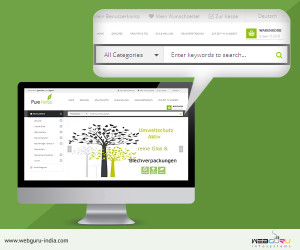
Multiple Navigational Ways to Find Products: To drive more sales, make your website design easily navigational so that potential customers can look for products in different ways. Showcase the latest and interesting products on your company homepage to draw maximum exposure that will lead to better ROI at the end of the day. But for customers who know exactly what they are looking for, a search box can help them navigate to the product page directly.

Clean Approach: Do not opt for a complicated structure that may have your customers confused and baffled. It is always suggested that you maintain a clean and simple approach that helps customers understand and choose your services or products easily.

Thu 27
Jan
2011

Designing something new and innovative is a constant challenge that keeps a designer under duress. Slideshow pattern is the new age website design strategy that makes it a favorite among designers and rules the modern web industry. Its breezy navigational options and user friendly experience make it an excellent creative solution that helps add vigor and dynamism to a website.

Use some fabulous slideshow pattern for your website that not only help you save layout space but also ensure to attract viewer’s attention instantly. Read below to know about the various types of slideshow patterns that help you rise above the crowd of mediocrity:

Standard Slideshow: Standard slideshow makes a popular pattern that is practiced widely by web designers to add more visual presence to a website design. Its non numbered animation has a subtle easiness that builds an aura of personal feel. Elegantly designed for websites to display small amount of slides, standard slideshow is an effective pattern to bank on.

Left-Right Slideshow: Here’s another commonly used slideshow pattern that allows users with flexible accessibility. Its distinctive approach with two or three images displayed on the layout provides viewers with left and right control options to scroll through the slides easily. Moreover, the slide-up description feature blended with an internal side up effect makes for an added bonus.

Full Screen Slideshow: Exhibiting excellent design work that takes viewers for a ride to another level, full screen slideshow pattern is a visual treat to savor. In this slideshow pattern, designers get to engage in free flow of their creative potential. Displaying each product item in full screen form with short description, viewers are provided with two arrows at the top that allows them to enjoy easy shift and slide navigation.

Numbered Slideshow: Elegant and simple in look, a numbered slideshow displays the artistic brilliance of a designer at its best. Its power packed approach with multiple numbered navigational controls is sure to attract viewers instantly.

Creative innovation is the ‘in-thing’ that makes your website design rise above the average. But to come up with innovations is a tough job that can be quite drilling at times. If you are feeling exhausted thinking of ways to add the required ‘magic’ for your website, take a chance with illustrations.

A simple illustration with a friendly approach can be the creative solution for you to bank on as it helps you reach out to targeted audience easily. With illustration, you will be able to add “WOW” effect in your website to win the hearts of viewer’s straight away. Here we bring for you some excellent use of illustrations that becomes the prominence of the design:

Shout Digital Limited: The cartoon images used at the header of the website displays creativity in its best form. Undoubtedly an instant eye catcher, the illustration acts as a soothing relief that becomes the flavor of the design. Its innovative self introductory approach is an added bonus that is sure to have a smile on your face.

Olive Crush: Browse through the simple yet attractive illustration used in this website that takes you for a ride through the natural elements. The sparkling contrast of dark background with light shaded artworks makes it a winner all the way. A definite treat to viewers, this website design is a must check out.

Bird Boxx: Sober and subtle in approach, this website design brings out the mesmerizing beauty of illustration at its best. Simple and done in light shades, the bird’s box image becomes a suitable match to the website’s name that reaches out to viewers effectively and appropriately.

Black Moon: A brilliant illustration design that has tapped the best creative abilities of the designer, this website takes you for a virtual space trip. The spontaneous approach of the image with a tint of humor makes it a winner that makes its way to targeted audience easily and effectively.