Archive for the ‘Corporate Identity Design’ Category.

Visual vocabulary consists of design elements that play a crucial role in creating brand identity of your company. These elements are secondary ones (logo being the primary element) and consist of graphic design, colors, font, and the paper type.

After you have incorporated all the elements in the visual vocabulary, checking their consistency is critical. This is because a consistent visual vocabulary will create a professional image of the company, making it (the image) even stronger. Furthermore, it will help people to recall corporate identity design of your company more easily.

Here are few ways you can develop a consistent visual vocabulary.

Incorporate Similar Images throughout your Promotional Materials

With the help of this strategy, your company can create a powerful impression on the target audience. We discuss this point in details.

  • Use the logo design of your company in all the business documents and marketing materials. You can also consider repeating your contact information, line art, tagline, and any decorative styles throughout the products and advertisements.
  • Let us assume that you own a web design company and use interesting images for highlighting your business. Stick to images. Do not use clip-art suddenly because it would disrupt image of your company.
  • Maintain consistency by placing graphic and logo designs in similar areas of marketing materials. If you have incorporated the logo in upper section of your business card design, do not place it in lower section of the brochures.

Choose Coordinated Fonts

Select few coordinated fonts and use them repeatedly in the marketing materials.

  • Logo Font- This is the font you should use in your logos. It should be unique and interesting.
  • Secondary Font- Fonts used in taglines, graphics, quotes, and headlines are known as secondary fonts.
  • Tertiary Font- You can opt for tertiary font, when secondary font is unavailable. You may use it for mid-length information, such as contact details.
  • Serif text Font- This is perfect for printed documents, especially lengthy ones.
  • Sans-Serif Font- This font is ideal for designing a website or creating shorter printed materials.


  • Website Font- This font refers to the one you can use for creating a website.

Depending on your business requirement and preferences of target audience, you can use some or all these fonts to create consistent visual vocabulary.

Opt for the Same Color Scheme

Using similar color palette is critical. This will help your audience to identify your company more easily. Here are few tips.

  • If your logo consists of one or two colors, including them in the main color palette of your company can be a great idea. Avoid using excessive number of colors. Remember that this strategy can create a disjointed image of your brand identity.
  • If you want to extend the basic color scheme, using shades of existing colors can be a great idea. For example, if you use light green in your logo, you can select dark green for extending the color palette.
  • Using complementary shades of the main color can be a simple way to extend your color palette. For more information, refer to the color wheel.
  • As stated earlier, color consistency is important. If you use bright colors in logos, do not use suddenly dull colors in brochure designs.

Pick out Coordinated Papers

Using high-quality paper for marketing your products is critical. Read on to know more.

  • As stated earlier, consistency between various elements of visual vocabulary is critical. The same rule applies for paper quality as well. If you are using thick paper for brochure designs, for example, choose the same paper for creating letterheads.
  • Make sure that type of the paper complements purposes of the business. If you have a website design company, choose textured paper. On the other hand, smooth and white paper is perfect for those who offer technical or medical services.

We highlighted few tips that will help you to create a consistent visual vocabulary. Additionally, you need to ensure that the writing style that you use for brochures and advertisements is consistent as well. Paying attention the marketing timing is critical as well.

Let us assume that you send readers newsletter on a particular date and time of the month. In such a situation, you should always try to send it at the same date and time every month. This will fulfill your clients’ expectations and create a positive impression.

Corporate identity refers to the professional image of a company. To create a strong corporate identity, you need to market promotional materials of your company aggressively. These materials can include logo, brochures, website, business cards, envelope, and letterhead.

The importance of a powerful identity lies in the fact that it leaves a strong impression on the target audience. It highlights benefits of your company and informs customers about your values and goals. Unfortunately, some people believe in the myths surrounding corporate identity. We highlight these myths and highlight the correct approach.

Myth 1- Small companies do not need a corporate identity

This is a wrong concept!

Corporate identity comes with various advantages and even if your company is small, you should take advantage of them. Remember, that with the help of a strong brand identity, you can enhance your reputation and number of clients. This in turn, will help you to expand your business.

Myth 2- Anyone can create the design of my company

Some people assign the job of developing corporate identity to friends/colleagues. They believe that this strategy will save money. Unfortunately, they are unaware of the fact that this is a wrong approach.

If you hire unprofessional persons for creating your corporate identity design, it can permanently damage reputation of your company. These persons may not take the project seriously and give it as much attention as a professional would give. Rather, opting for professional graphic design services would be a good idea.

Myth 3- I do not require a brand identity

If you own a business, you will require a brand identity. This is irrespective of the size and purposes of your company. Remember, that brand identity is a critical tool for creating awareness about your company and earning profits.

Myth 4- Building corporate identity is an impersonal approach

No.

If you create the identity of your company in a clever manner, people would never consider it as an impersonal approach. In fact, if you research in details, you would discover that many large companies have personalized their identities. Examples can include KFC and Mrs. Field’s Cookies. Corporate identity of these companies is based on their personal approach. Likewise, you can also add a personal touch to your brand identity.

Myth 5- It is not worth of any expenses

It is true that for creating a powerful identity, you need to spend money. However, consider the fact spending money in this regard will guarantee you a higher return on investment. With help of a strong company identity, you can attract greater number of customers. This in turn, will improve your sales rate and overall profit.

Myth 6- It involves excessive work

It is not true that to develop corporate identity; you need to put in greater efforts. It is a known fact that to establish a business, you need to work hard in general. Creating a brand identity is only an aspect of the hard work you need to put in. It does not demand any greater effort exclusively.

Myth 7- I cannot opt for symbols that have been implemented before

Wrong.

You can always opt for previously used symbols. However, the way you combine these symbols should be unique. This is important because it will help you to create a unique logo design. You can consider useful techniques, such as arranging symbols in a different way or creating symbols by using paint strokes.

We highlighted few myths surrounding corporate identity. Study them carefully so that you can avoid falling into their trap.

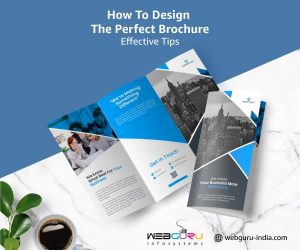
A brochure helps you to promote your products/services to a large audience. Whether you are about to launch a new product or want to express your business ideas, a brochure can efficiently serve the purpose of informing your target audience about your business.

Now, people pick up many brochures in business meetings; conferences, etc, for the sake of it. Naturally, they forget about them in a few minutes. If you want to design an appealing brochure that can capture the viewers’ attention instantly, and hold it long enough to make him go through your brochure, your brochure design needs to have few basic qualities like outstanding appeal, interesting content, and good paper and print quality.

Your Brochure’s Content

When you start a corporate brochure design, the first thing you need to think about is what information you are going to share with your audience through the brochure. Brochures aren’t mini-books for you to write down about your company and products. You can only write the most important things that will appeal to the target audience.

  • You should write your company’s purpose, business ideas, etc. in the headlines in italics or bold font to grab the viewer’s attention. You can write the USP of your products and highlight it with borders as well, to deliver the message effectively.
  • Choose stylish, yet readable serif fonts that can be read easily. Brochures are meant to provide information through a small space. If the font is tough to read, viewers won’t read the brochure. Don’t use more than 3 font types in your brochure.
  • Your brochure cannot contain any mistake. Check content (correctness of information, grammar, sentence construction, spelling, paragraphs) before you send your brochure for printing.

You can collect some of your competitors’ brochures and find out what points they have highlighted to make their business successful. Of course, you have to use your own creative ideas and write original text to impress viewers.

Your Brochure’s Design

A design should essentially be simple for it to be successful. When you use too many images or content in the brochure, it looks congested and loses its appeal. You have to design the brochure sophisticatedly and use only the most useful content and images in your brochure.

  • Write the USP of your products, use the images of products and give your contact information. Leave enough white space to help viewers easily scan your brochure.
  • Images play a crucial role in brochure designing. Images help you to provide a glimpse of your products/services to your audience. You should use high resolution images in your brochure; else, it may get pixilated while printing and hurt your brand image. A blurry image equals to a negative impression. Don’t use images less than 300 dpi.
  • You should use aesthetic colors in your brochure to capture the viewers’ attention. Choose colors carefully and use only those colors that go well with your business. For instance, a baby products company cannot be using black and red in its brochure, or a car racing company use pink and blue.

Use color combinations intelligently to draw the viewers’ eyes to the most important parts of the brochure and create an emotional connection with them.

In conclusion, if you don’t want to compromise the quality of your brochure, make sure you have it printed from a professional printer and use only the best quality paper. This may increase your expenses, but the results will be impressive.


Tablet computing received new lease of life with iPad redefining this segment a year back. Since then, every major technology giant, including Lenovo and Dell, has been busy introducing its own versions of tablet touch screen devices.

Amazon, which is mostly known as a major online retailer with an impressive corporate identity, does not want to be left behind in this race to woo gadget users. It has revamped its popular Kindle e-book reader with new features and wants to give serious competition to Apple, which still owns a majority of stake in global tablet market.

Needless to say, increased use of tablets for web browsing has opened new career avenues for web developers who are exploring options to develop tablet based apps. They have several platforms to choose from, including iOS, Android and Blackberry OS. Windows 8 will hit shelves the next year, which is being touted by Microsoft as a tablet centric OS.

So, what does the release of Kindle Fire mean for web programming veterans specializing in tablet app development?

For a website development company focussing on tablet app development, Kindle Fire remains an intriguing device, more so for its unremarkable new hardware. It is true that Amazon has unveiled 4 variants of Kindle but basically, there is only one Color tablet and three Ink-based devices. These three Ink-based tablets offer more feature than earlier versions of Kindle, but they do not have any groundbreaking features as such. Kindle Touch comes with a touch based Infrared Sensor and lacks mechanical buttons. Only Kindle Fire offers a Touch screen with Color Display.

As a matter of fact, ink-based Kindle models cannot be classified as full-fledged tablets and developers do not have many reasons to warm up to them. Kindle Fire does run on Android, though Amazon has not highlighted on that aspect much, yet, in its promotional activities.

As a tablet, it falls far short of competition. For instance, it does not have a camera, GPS navigation and SD card slot, etc. As far as connectivity goes, there is WiFi and USB. This does limit scope for developers willing to make apps for Kindle Fire.
Amazon Kindle Fire is equipped with new Silk browser. This is useful for delivering good results where connectivity is sluggish. Given its feature set and usability, Kindle Fire does not pose much threat to Android tablets. It is more than an e-Book reader for sure, but does not contain any major new feature.

Developers rue the fact that Kindle KDK, unveiled almost a year back, is still in beta version. There are a handful of apps available for Kindle but prospect of final version of KDK is uncertain. Android developers are warming up to release of Android OS4, which is just a few days away. However, there is no likelihood of Amazon switching to this much talked about update for its flagship e-book tablet.

Kindle Fire is based on a modified version of Android Froyo, which can make developing apps for it rather cumbersome. Google is trying to do away with Android segment fragmentation and this may make things difficult for Kindle app development.

From initial developments, it seems that Amazon is not going all the way out to woo developers to make apps for its tablet, in contrast to Microsoft. Amazon did not talk much about developers at launch of new Kindle.

Most people have the tendency to accept and tuck away business cards without a secondary glance. Unfortunately, this is the fate shared by 99% of businesses that fade without leaving a trace in a sea of competitors. Assuming you don’t want to die a similar death, here are some helpful tips to make sure your business card cements your company’s identity in your clients’ minds:

1. Business Card Design – A business card is part of your corporate identity that reminds the client of you in your absence. While an amateurish design would mean lack of professionalism, flashy design does not scale well either. Your business card should therefore have the right balance of color and simplicity to make it attractive and look professional.

2.Message/Content – The purpose of handing business cards to clients is ensuring you are contacted later. Business cards can also be good advertising mediums. In both cases, make sure details on your business card are precise and necessary, like name, contact numbers, and emails. Your USP should be mentioned in crisp, professional terms. A good business logo with motto usually suffices as USP.

3.Feel of Your Card– How does your business card feel when held? Does your business card have good paper quality? Cheap, thin paper is never good to hold. Plastic and metal for business cards may project your business as rigid.

4.Color – Colors reflect your brand and expresses your business style. Most business cards are usually white with only the logo to add color. A solid background color with clear print is not such a bad idea, especially if you want your business card to stand out. Of course, aesthetics is important and contrasting background and text is better than a complimentary match of the same.

5.Typography – Font size must be legible and font style should be professional. Avoid using font styles like Comic Sans, Bookman Old Style, Monotype Corsiva, Arial Black, or basically any style that uses elaborate patterns or appears too bold. Arial, Helvetica, Verdana, Calibri, Tahoma, and other sans-serif typeface fonts are smarter options to depict a ‘serious’ business.

6.Quality of Print – Good print quality will produce true colors and crisp letters that will enhance the look of your business card.

7. Size - Business cards have standard sizes of 3.75×2.25 inches. If you are going for smaller dimensions to bank on cuteness, chances are your card will be lost in a bunch of other standard size business cards. Large business cards will help you grab attention, but if it doesn’t fit in your client’s wallet, you know where it’s headed next.

Don’t treat your business card design as unimportant. It’s the only piece of your company your client will keep with himself for future use. You don’t want to hand your client a nondescript little piece of paper he can use to scrape chewing gum off his shoes!

Mon 27
Jul
2009

Corporate identity involves establishing the presence of a company through a corporate logo and other representative tools. The brand identity of a company is also at times reflected through the corporate identity.

But ideally brand identity and corporate identity is not one and the same thing. They may be closely related to each other. But by merely changing the logo will not affect the existing brand identity of the company.

A corporate identity of a company generally develops with time. If the corporate identity is not well established, it may hamper the development of the brand identity. But too much of alteration in the presentation of a company brand can also leave the customers in a concern. The corporate identity is dependent on the various factors like the reputation of the company, the service provided by the company, its performance and the value maintained by it round the year. Continue reading ‘Establishing the Corporate Identity of a Company’ »

Wed 03
Jun
2009

There is no doubt in the fact that in today’s world of commercialization, corporate identity is one of the key requirements for any business firm. Even it is observed that a comparatively smaller organization with a strong corporate identity can expect to have better success than its strong competitor.

You may have established a small organization and is not sure how to get acceptance from people. Do not worry; put all your labor to create a favorable brand image. In no time you will see a new set of customers are there to avail your services and purchase your products.

Different strategies can be adopted for developing corporate identity design. However, before starting this important work, it is always better to understand the major factors affecting a corporate identity. The remarkable factors are mentioned below:

  • Launching a Website- In present times, each and every organization should create its own business website. This promotes the products and services of an enterprise and thus by highlighting the unique selling points, websites contribute in the corporate image building.
  • Designing a Corporate Logo- a well-designed logo can provide positive image to a company. It represents an organization and tries to draw attention of the prospective clients. Continue reading ‘Factors Influencing Corporate Identity’ »
Wed 27
May
2009

A successful business name is easily recognized among the target market if it has established its corporate identity. A corporate identity does not only involve popularizing the company logo but it comprises some other supporting elements. The corporate identity of any business comprises corporate behavior, corporate designs and corporate communications. The corporate behavior reflects the norms and ethics followed in the company whereas a company establishes its corporate communication through public relations, media and commercials. The brochures, business cards, flyers, business logo and stationary comprise the corporate design of a company. Continue reading ‘Corporate Identity – Identifying a Business Presence’ »